

Contrast Therapy for Athletes: Recovery Without the Toughness Theater
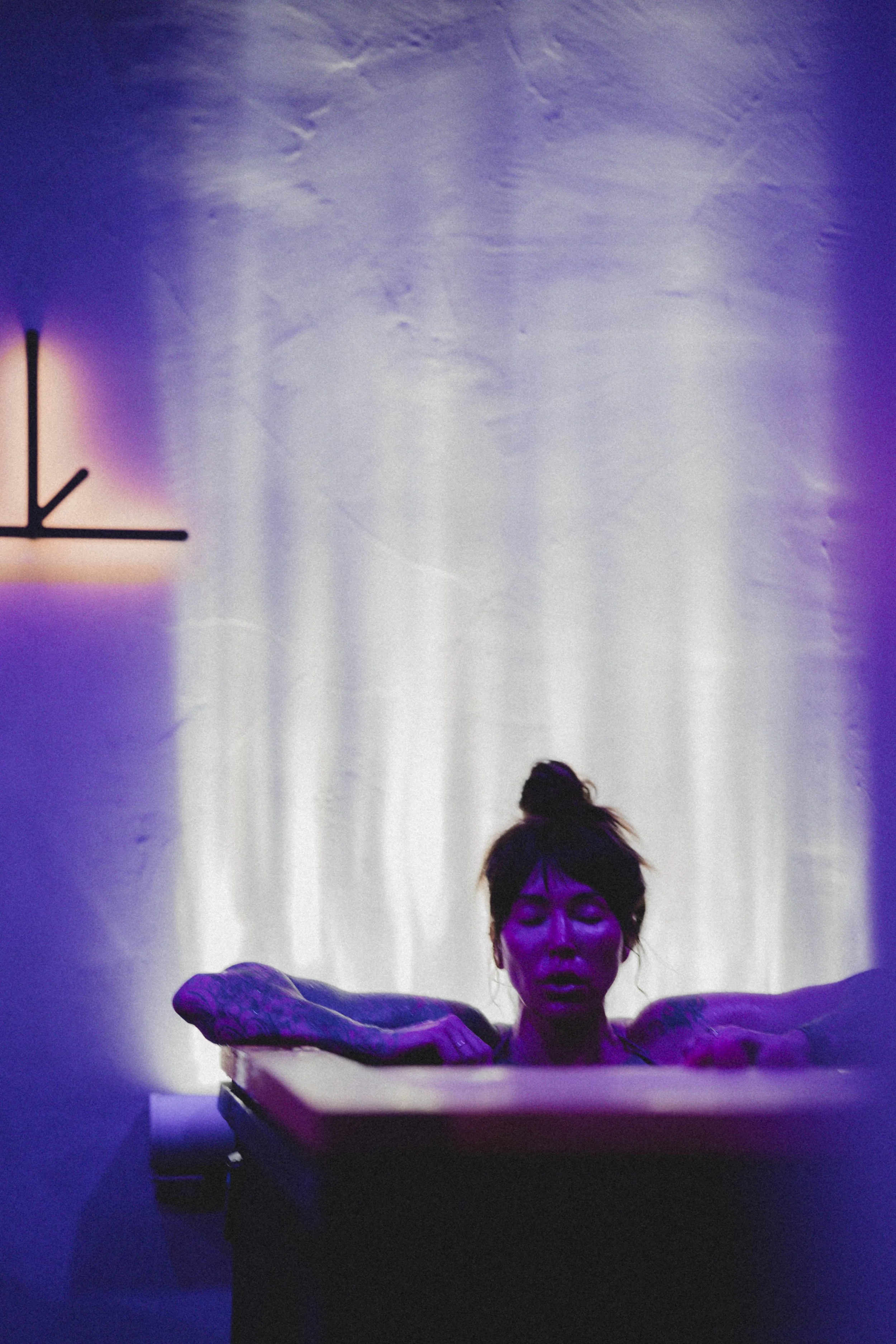
Contrast therapy is the deliberate alternation between hot and cold immersion — minutes in heat, a sharp plunge into cold, repeated in cycles — used to move blood, settle the nervous system, and shorten the gap between hard efforts.
For an athlete, it's a recovery tool with a specific job, and the job depends entirely on what you're training for. Timed right, it speeds you back to work and can amplify the adaptation you're chasing. Timed wrong, it can quietly tax the one thing you trained to build. It is not a test of pain tolerance, and the research that supports it has almost nothing to say about how much it hurts.
That last part is where the toughness crowd gets it backwards.
What does contrast therapy actually do for an athlete?
It drives circulation and downshifts your nervous system.
Cold makes your vessels clamp down. Heat opens them back up. Alternate the two and you get a pump — blood pushed and pulled through the tissue you just beat up, without you having to do another rep to make it happen. Contrast water therapy reliably reduces muscle soreness compared to sitting still after hard training (Bieuzen et al., 2013), lowers perceived fatigue (Higgins et al., 2017), and nudges you toward the parasympathetic, rest-and-recover side of the nervous system after a hard effort (Broatch et al., 2018).
Contrast therapy is a circulatory drill, not a punishment, because the benefit comes from the vascular pump and the nervous-system reset — not from how long you can white-knuckle the cold.
Who actually pioneered contrast therapy for athletes?
The Soviet and Eastern Bloc sports programs did — and they treated recovery as a science they called restoration (vosstanovlenie).
Through the 1960s, '70s, and '80s, Soviet sports scientists built recovery directly into the training plan as a variable to be managed, not left to chance. Restoration had its own literature and its own toolkit: massage, sauna, and contrast hydrotherapy were programmed inputs, dosed and timed against the athlete's training load the same way the training itself was (Verkhoshansky & Siff, Supertraining; Brunner & Tabachnik, 1990). Contrast baths weren't pulled out reactively when someone felt sore — they were scheduled, matched to the phase of the cycle, and adjusted as the load climbed. The athletes who came out of that system rewrote the record books in Olympic weightlifting and track and field.
The Soviets got more out of contrast therapy than anyone since because they ran it as a planned input inside a periodized system, where the dose was engineered instead of improvised.
Why has recovery turned into a toughness contest?
Because suffering films well and physiology doesn't.
Scroll for thirty seconds and you'll find someone gasping in a tub of ice with a caption about mental fortitude. The plunge became content. Colder, longer, earlier in the morning, more visible discomfort — the whole thing drifted from a recovery protocol into a performance of grit. And a performance has a different objective than a tool. A tool is judged by its output. A performance is judged by how it looks. Once recovery becomes a performance, "harder" starts to feel like "better" — and that instinct is exactly where athletes start hurting themselves.
Your nervous system does not know how tough you looked getting in. Recovery is measured in your next session, not in the plunge itself, because the only outcome that counts is whether you show up tomorrow able to work.
Does colder and longer actually work better?
No. Cold exposure is a dose, not a dare — and the dose plateaus long before the discomfort does.
The cleanest evidence here is almost funny. Researchers put one group in cold water and sat another group in room-temperature water with a scented skin rinse added, telling the second group the rinse was a cutting-edge recovery aid. The believers recovered about as well as the plungers (Broatch et al., 2014). A meaningful slice of what people credit to the cold is expectation and ritual doing their work.
That doesn't make contrast therapy useless — the circulatory and autonomic effects are real (Broatch et al., 2018). It makes the arms race pointless. Fifteen minutes of theatrical agony doesn't beat a few well-timed minutes at a sane temperature. Chasing colder water for its own sake is chasing the part of the experience that doesn't do the work.
Trying to pin down exact temperatures defeats the point. The right temp is the one that is slightly uncomfortable—not painful. This is different for everyone because it is determined by the status of your nervous system, not some optimizer protocol.
Is contrast therapy after training?
Only for one kind of training, at one moment — which is why "cold is bad for training" falls apart the second you ask which training.
The blunting is specific to building tissue. Regular cold immersion in the hours right after lifting quiets the mTOR and p70S6K signaling and satellite-cell activity that add new muscle, and across a training block that shows up as less size (Roberts et al., 2015; Fyfe et al., 2019). The mechanism is the same thing that makes cold feel good: it's anti-inflammatory, and the post-lift inflammatory response is part of how a hard session signals for repair. Quiet the inflammation in that window and you quiet the growth.
But read the fine print. That effect only bites people training specifically and hard enough to drive a real hypertrophic stimulus — not the person getting a general sweat a few times a week. Top-end strength is a softer story: some studies see it blunted, others see it climb normally even while the fibers grow less, because maximal strength rides on neural adaptation that cold doesn't clearly touch (Fyfe et al., 2019; Petersen & Fyfe, 2021). Explosive power and rate of force development lean the same way as size, on thinner evidence (Petersen & Fyfe, 2021).
Cold blunts growth only when it lands on a fresh, real training stimulus, because it's the immediate inflammatory response — not the cold itself — that the growth depends on. The fix isn't to fear the cold. It's to aim it.
What about your aerobic engine — does cold or heat raise the ceiling?
Here the two temperatures split, and they split along a line you already know: output versus efficiency.
Top-end aerobic capacity — VO2max, maximal aerobic power — is mostly a delivery problem. It comes down to how much oxygenated blood your heart can push (cardiac output) times how much your muscles pull out of it (extraction). Heat and cold each work one half.
Heat works the delivery side, and it's the only one with a claim on the ceiling. Repeated heat exposure expands blood plasma volume, which fills the heart better, raises maximal stroke volume, and lifts cardiac output — the engine's top end. Ten days of heat acclimation raised VO2max around 5% in cool conditions and 8% in the heat (Lorenzo et al., 2010); three weeks of post-training sauna raised trained runners' time to exhaustion by 32%, mostly through that same plasma-volume expansion (Scoon et al., 2007). One caution if you're leaning on this: the carryover to cool-weather VO2max is contested, and some well-run studies found no bump beyond normal training (Karlsen et al., 2015). The effect is most reliable for performance in the heat, and best pursued with longer protocols aimed at blood volume.
Cold works the other side. It doesn't raise your ceiling — in endurance-training studies it's neutral on VO2max — but post-exercise cooling raises AMPK, PGC-1α, and mitochondrial protein, the machinery that lets muscle extract and burn oxygen more efficiently (Ihsan et al., 2015). That's economy and fatigue resistance, not top-end delivery. AMPK is the cell's energy sensor and runs the aerobic program; it also happens to sit opposite the mTOR growth pathway, which is part of why the same cold that builds your aerobic base can dull hypertrophy in the wrong window.
Heat trains aerobic output. Cold trains aerobic efficiency. Contrast therapy touches both ends of the engine, which is exactly why it belongs stacked onto your conditioning work rather than treated as a generic recovery add-on.
So when should you actually use hot and cold?
Match the timing to the adaptation. Three rules cover most of it.
Protect your growth work. If you're in a hard hypertrophy block, keep cold out of the window right after the session. Sauna or plunge before you lift, or wait four to six hours after — either side of that immediate window, you keep the recovery benefit without touching the growth signal (Roberts et al., 2015). Keep cold off a fresh growth stimulus. That's the whole rule.
Go easy on the strength and power sessions — but don't lose sleep over it. Cold immediately after top-end strength or explosive work is worth a little caution, since it may nick those adaptations. But the evidence there is thin and mixed, and maximal strength runs largely on neural wiring that cold doesn't clearly disturb (Fyfe et al., 2019; Petersen & Fyfe, 2021). Give it the same four-to-six-hour spacing if it's convenient. If it isn't, this is not the hill to die on..
Stack contrast onto your aerobic work. This is the one place the timing runs the other direction. Cold and heat both push aerobic adaptation — cold on the mitochondrial side, heat on the plasma-volume side — so running contrast after a conditioning or endurance session compounds the signal instead of blunting it (Ihsan et al., 2015; Scoon et al., 2007). Here, immediately after is a feature, not a mistake.
For pure bounce-back — in-season, back-to-back games, a brutal travel block, a tournament — timing barely matters. Use it whenever. The job there is to close the gap between efforts, and contrast therapy is built for exactly that (Higgins et al., 2017). The caveat is the dose, 1-2 cycles max and ensure proper rehydration.
Working numbers, from the water-immersion literature: cold in the 52-29°F range, a few minutes of heat alternated with a shorter burst of cold, three to four rounds, finishing on cold (Versey et al., 2013). But the dose is the easy part. The hard part is running it on a schedule instead of turning it into a contest with yourself — which is the entire reason we run it as a guided, timed practice rather than a solo endurance test. A ritual you keep is worth more than a plunge you post.
TL;DR
Contrast therapy is alternating hot and cold immersion used to move blood and settle the nervous system — a recovery tool whose value depends on what you're training for, not on how much it hurts (Bieuzen et al., 2013; Higgins et al., 2017).
"Cold is bad for training" is too blunt to be true. Cold right after a hard hypertrophy session can blunt growth by quieting mTOR/p70S6K signaling — but only in that immediate window, and only for people training hard enough to trigger real growth (Roberts et al., 2015; Fyfe et al., 2019).
Top-end strength is mostly spared because it rides on neural adaptation; explosive power leans with hypertrophy on thinner evidence (Fyfe et al., 2019; Petersen & Fyfe, 2021).
Heat raises the aerobic ceiling (VO2max, through plasma-volume-driven cardiac output), though cool-weather carryover is debated (Lorenzo et al., 2010; Scoon et al., 2007; Karlsen et al., 2015). Cold builds aerobic efficiency at the muscle (mitochondria), not the ceiling (Ihsan et al., 2015).
Implementation: sauna or cold before hypertrophy work or 4–6 hours after; go easy on cold right after top-end strength or power but don't over-worry; and stack contrast after aerobic work, where it amplifies the adaptation.
Recovery is measured in your next session, not in how much the last one hurt.
References
Bieuzen, F., Bleakley, C. M., & Costello, J. T. (2013). Contrast water therapy and exercise induced muscle damage: A systematic review and meta-analysis. PLoS ONE, 8(4), e62356.
Broatch, J. R., Petersen, A., & Bishop, D. J. (2014). Postexercise cold water immersion benefits are not greater than the placebo effect. Medicine & Science in Sports & Exercise, 46(11), 2139–2147.
Broatch, J. R., Petersen, A., & Bishop, D. J. (2018). Cold-water immersion and recovery/adaptation following exercise: a review. Sports Medicine, 48(6), 1369–1387.
Brunner, R., & Tabachnik, B. (1990). Soviet training and recovery methods. Sport Focus Publishing.
Fyfe, J. J., Broatch, J. R., Trewin, A. J., et al. (2019). Cold water immersion attenuates anabolic signaling and skeletal muscle fiber hypertrophy, but not strength gain, following whole-body resistance training. Journal of Applied Physiology, 127(5), 1403–1418.
Higgins, T. R., Greene, D. A., & Baker, M. K. (2017). Effects of cold water immersion and contrast water therapy for recovery from team sport: A systematic review and meta-analysis. Journal of Strength and Conditioning Research, 31(5), 1443–1460.
Ihsan, M., Markworth, J. F., Watson, G., et al. (2015). Regular postexercise cooling enhances mitochondrial biogenesis through AMPK and p38 MAPK in human skeletal muscle. American Journal of Physiology-Regulatory, Integrative and Comparative Physiology, 309(3), R286–R294.
Karlsen, A., Racinais, S., Jensen, M. V., et al. (2015). Heat acclimatization does not improve VO2max or cycling performance in a cool climate in trained cyclists. Scandinavian Journal of Medicine & Science in Sports, 25(S1), 269–276.
Lorenzo, S., Halliwill, J. R., Sawka, M. N., & Minson, C. T. (2010). Heat acclimation improves exercise performance. Journal of Applied Physiology, 109(4), 1140–1147.
Petersen, A. C., & Fyfe, J. J. (2021). Post-exercise cold water immersion effects on physiological adaptations to resistance training and the underlying mechanisms in skeletal muscle: A narrative review. Frontiers in Sports and Active Living, 3, 660291.
Roberts, L. A., Raastad, T., Markworth, J. F., et al. (2015). Post-exercise cold water immersion attenuates acute anabolic signalling and long-term adaptations in muscle to strength training. The Journal of Physiology, 593(18), 4285–4301.
Scoon, G. S. M., Hopkins, W. G., Mayhew, S., & Cotter, J. D. (2007). Effect of post-exercise sauna bathing on the endurance performance of competitive male runners. Journal of Science and Medicine in Sport, 10(4), 259–262.
Verkhoshansky, Y. V., & Siff, M. C. (2009). Supertraining (6th ed.). Verkhoshansky.com.
Versey, N. G., Halson, S. L., & Dawson, B. T. (2013). Water immersion recovery for athletes: Effect on exercise performance and practical recommendations. Sports Medicine, 43, 1101–1130.
