


Old practice.
New proof.
Heat, cold, breath, and sound have been used for centuries because they work. Modern research is now catching up to what the body already knew. Here is what the science says — and what we do with it.
Your nervous system
runs the show.
Most of waking life is spent in a low, constant hum of activation — alert, braced, slightly behind. Contrast therapy interrupts that hum by giving the body two honest signals it cannot ignore: deep heat, then sharp cold. The swing between them trains the system that manages stress, circulation, and recovery to respond and then release.
What follows is not a list of promises. It is a plain account of what each part of the Rytual hour does, and the research behind it.
Heat is the closest thing to passive cardio.
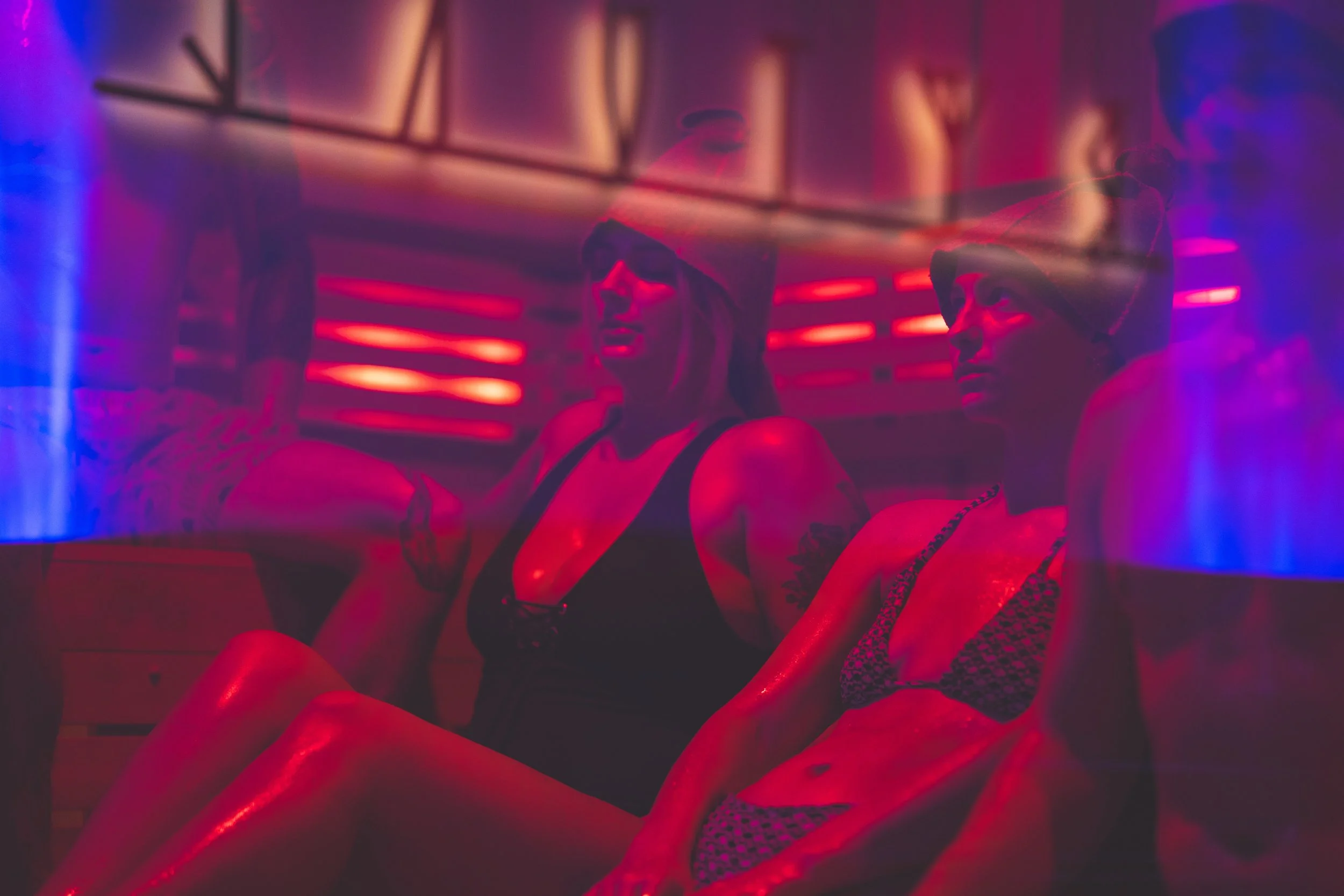
Sitting in deep heat raises your heart rate and dilates your blood vessels much the way moderate exercise does. Over years, regular heat exposure tracks with some of the most striking numbers in longevity research.
A 20-year study following roughly 2,300 Finnish men found that those who used a sauna four to seven times a week had a 40% lower risk of death from any cause than once-a-week users1 — alongside markedly lower rates of fatal cardiovascular events. The same body of research links frequent sauna use to a substantially lower risk of dementia and Alzheimer's over the same period.2 The sweet spot in the data is unglamorous: fifteen to twenty minutes at a traditional sauna temperature, done consistently.
These are observational findings — they show a strong association, not a guarantee — but the pattern is large, durable, and repeated across the literature.
Cold sharpens, then settles.
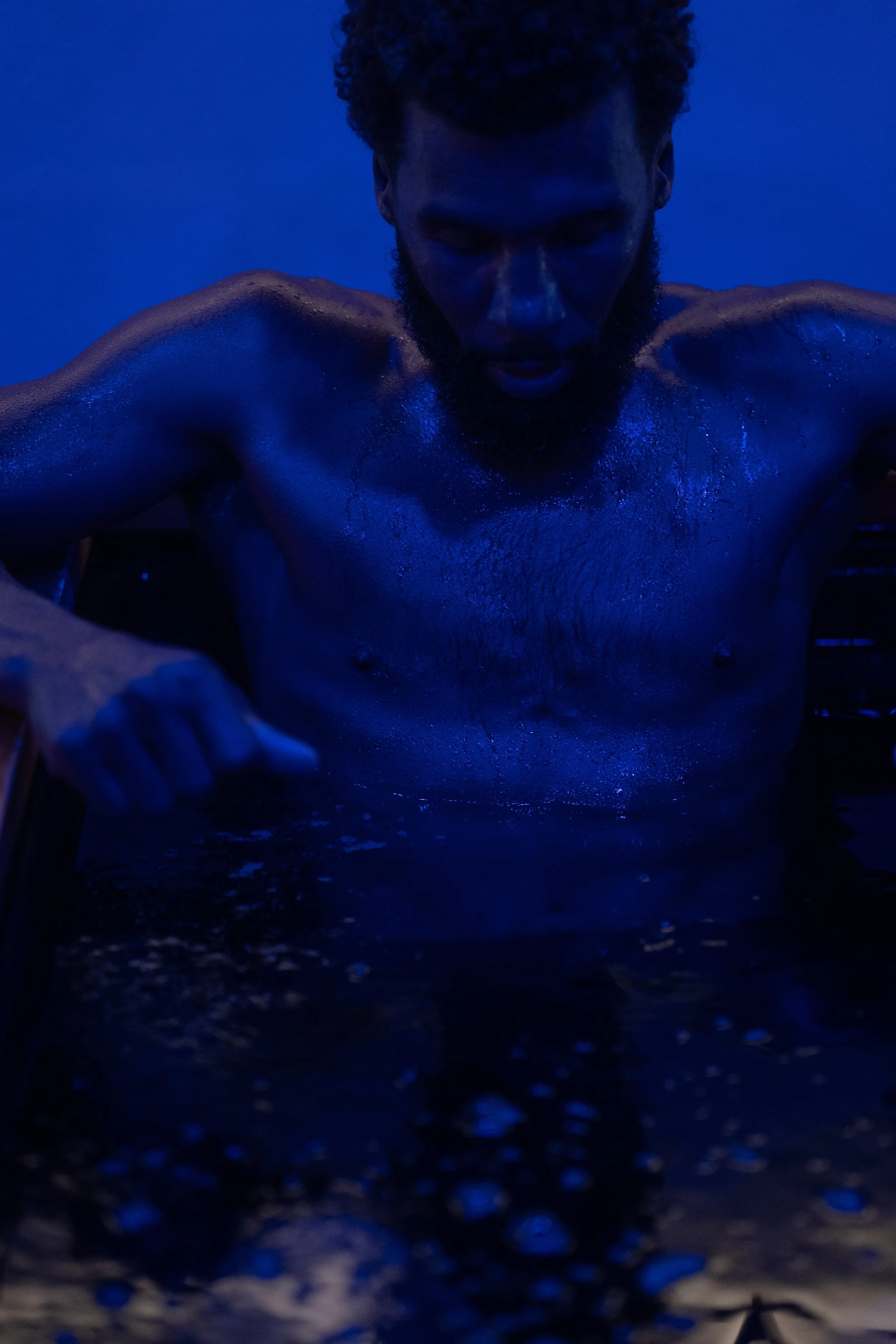
The first seconds in cold water produce a flood of norepinephrine and dopamine — the chemistry of focus and drive. In controlled measurement, dopamine rose by about 250% and stayed elevated well after participants stepped out.3 That is the lift people describe as clarity, and it is real.
A 2025 systematic review pooling eleven studies and more than 3,000 participants found that cold-water immersion was followed by lower stress some hours later, along with improvements in sleep quality and overall quality of life.4 Researchers are also studying cold-shock proteins that may support cellular resilience over time.5
We treat cold as a tool, not a test. You set the intensity. Our guide reads your body and will pull you back before you push past what is useful — because the benefit is in the controlled signal, not in how long you can suffer.

The fastest lever you have.
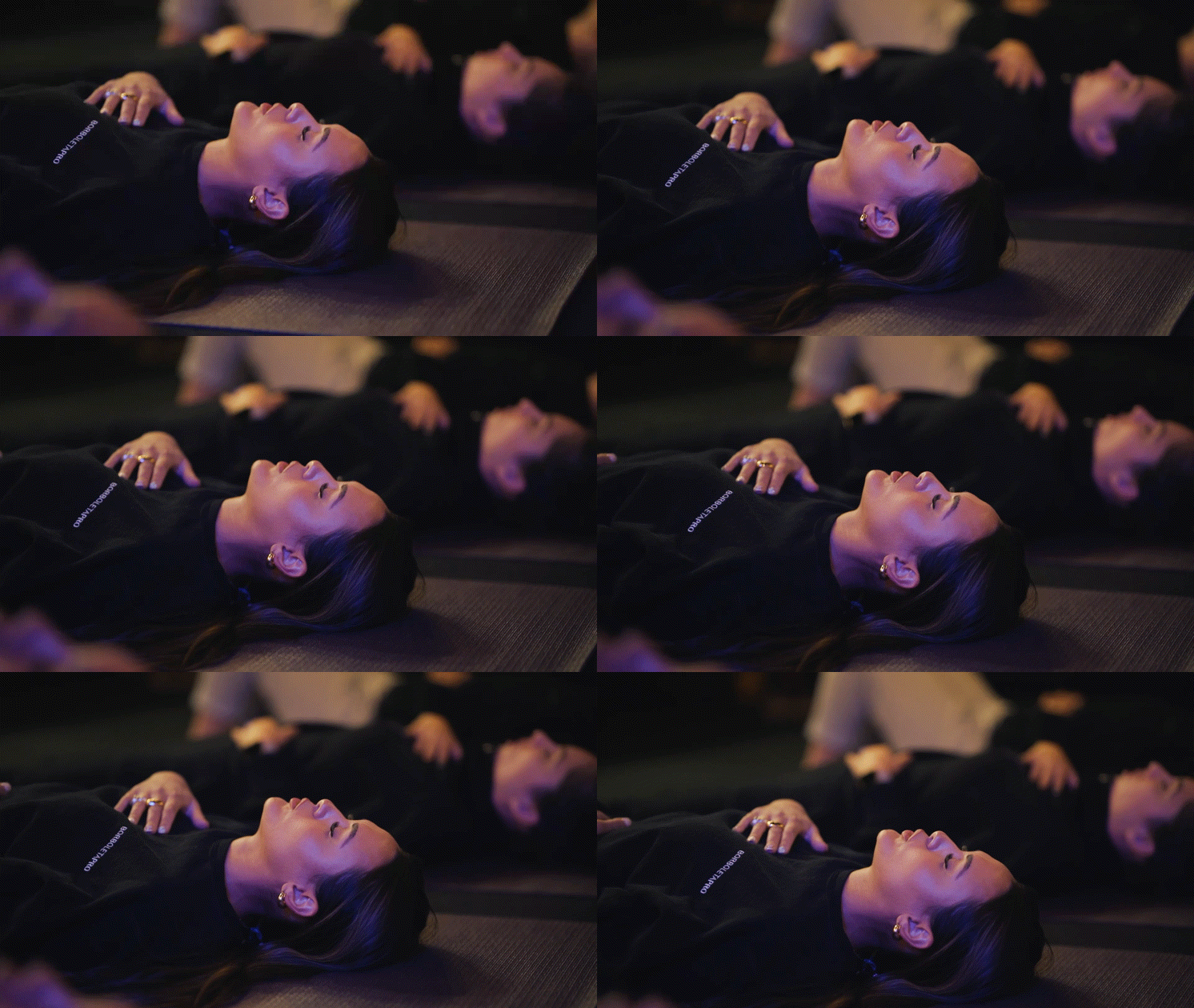
Breath is the one part of the nervous system you can drive on purpose. Lengthening the exhale tells the body the emergency is over. Done deliberately, it lowers arousal in minutes.
A 2023 Stanford trial found that five minutes a day of structured breathing improved mood and lowered physiological stress more than an equal dose of mindfulness meditation — with slow, exhale-weighted breathing (the "cyclic sigh") performing best.6 A separate analysis of 26 randomized trials reached the same conclusion: breathwork measurably reduces stress, anxiety, and low mood.7
Inside the hour, breath is what connects heat to cold and back again — the thread that keeps the swing controlled instead of chaotic.
Sound you feel as much as hear.
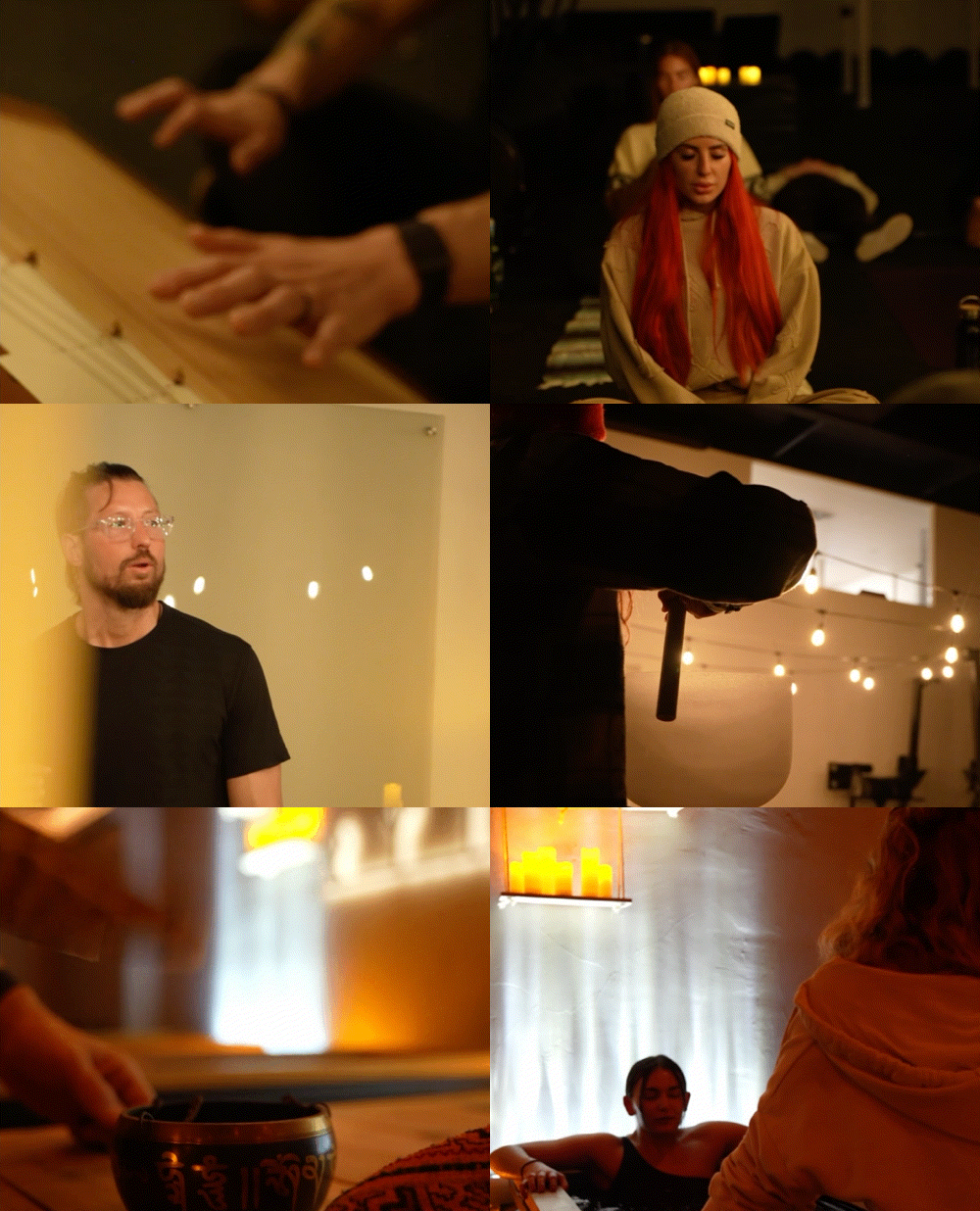
The session is scored, not silent. Low, resonant tones — curated sustained frequency — give the mind something to settle into so it stops narrating. In a study of singing-bowl sound meditation, participants reported significant drops in tension, anger, fatigue, and low mood afterward, with the largest shift among those who had never tried it before.8
Sound is the room's nervous system. It holds the pace, smooths the edges of the cold, and makes the heat feel like rest rather than endurance.
The shortest path to calm runs through the nose.
Scent reaches the emotional brain faster than any other sense, which is why a smell can change a mood before you have a thought about it. We use it deliberately. A review of eleven randomized trials found that inhaled scent lowered anxiety in nearly every study;9 we also use traditional offerings like Palo Santo, Copal, Sweetgrass, and cedar. These powerful scents are a way to clear your mind but also offer a way to anchor your memory to a time of pure relaxation and calm.10 It is a small touch with a measurable effect — and it is part of why the space feels different the moment you walk in.

Twelve people, on purpose.
We cap each session at twelve. Part of that is quality of attention. The larger part is that connection itself is one of the best-documented predictors of a long, healthy life.
Across a meta-analysis of more than three million people, social isolation raised the risk of early death by roughly 30% — a toll on par with well-known physical risk factors, serious enough that the U.S. Surgeon General issued a formal advisory on loneliness in 2023.11 Strong social ties run the other way, associated with significantly better odds of survival.12
A shared hour of heat and cold, with the same faces returning each week, is not a side benefit of Rytual. It is one of the active ingredients.
Every sense,
deliberately ordered.
Ice is cheap and a sauna is not complicated. What is rare is the orchestration — the order, the timing, the breath, and the sound, tuned to your body in real time. Heat opens the system. Cold sharpens it. Breath connects the two. Sound and scent hold the room steady throughout. One guided hour, capped at twelve, designed so you arrive carrying noise and leave with clarity.
Refresh
A gentler entry for first sessions, built around adapting to the cold.
Rejuvenate
Longer holds and layered breath patterns to widen your tolerance.
Recharge
The fullest sequence, ending in extended breathwork and deep relaxation.
Your guide chooses or adjusts the protocol to the room and to you. See the full timed sequences and breath structures on the Protocols page.
What the research
can and can't say.
Much of this evidence is young, and some of the strongest findings are observational — they show that people who do these things tend to be healthier, not that any single session guarantees an outcome. We think that is worth saying plainly. What is not in question is that heat, cold, breath, sound, and connection each move the nervous system in a measurable, repeatable direction. The best way to know what it does for you is to feel it once.
Change your state.
Book a single session, feel the difference, and decide for yourself. The drop-in is $42.
Reserve a Session →A few
questions.
The research, in full.
A complete source list for the findings cited above. Evidence quality varies by topic; observational studies are noted as such in the text.
- Sauna & mortality, cardiovascular disease — Laukkanen et al., KIHD cohort (~2,300 Finnish men, ~20 yr). PMC4409598
- Sauna & dementia / Alzheimer's — Age and Ageing, Finnish men. academic.oup.com
- Cold immersion & catecholamines (dopamine ~2.5×) — neurohormesis review. psychiatryonline.org
- Cold-water immersion systematic review (11 studies, 3,177 participants) — PLOS One, 2025. journals.plos.org
- Cold therapy & healthy aging (cold-shock proteins / RBM3) — review. PMC11872954
- Breathwork vs. meditation (cyclic sighing) — Stanford, Cell Reports Medicine, 2023. cell.com
- Breathwork meta-analysis (26 RCTs, 785 participants) — Sussex. PMC9828383
- Singing-bowl sound meditation (mood, tension) — Goldsby et al., 2017. journals.sagepub.com
- Lavender aromatherapy & anxiety (11 RCTs / 972 participants) — Healthcare, 2023. mdpi.com
- Lavender + chamomile RCT (older adults; depression, anxiety, stress). sciencedirect.com
- Social isolation & mortality (meta-analysis, 3.4M people) — Holt-Lunstad et al., 2015. journals.sagepub.com
- Social connection & health (2024 review; 2023 U.S. Surgeon General advisory) — World Psychiatry. onlinelibrary.wiley.com